


“We Believe LSU and Argonne National Laboratory Can Do a Lot Together”
March 26, 2026
We catch up with Claus Daniel, associate director of Argonne National Laboratory’s advanced energy technologies directorate, on why Argonne chose to partner with LSU on critical minerals and materials R&D.
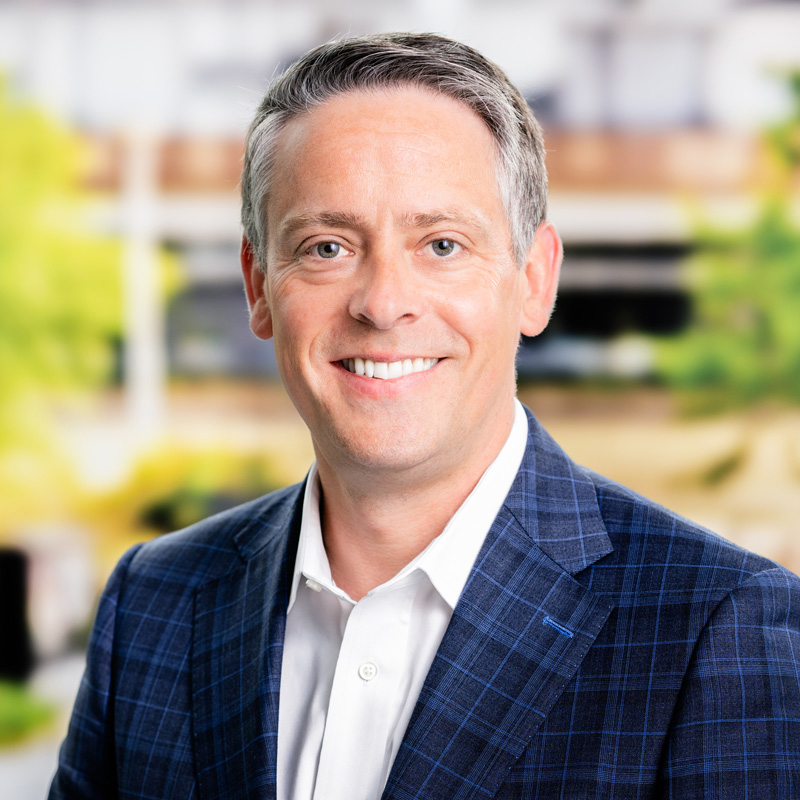
Claus Daniel, associate director of Argonne National Laboratory’s advanced energy technologies directorate
In January, Argonne, one of the U.S. Department of Energy’s 17 national laboratories, signed a partnership agreement with LSU that includes research and development for critical minerals and materials. Can you tell me why LSU is the right partner for Argonne?
At Argonne, we’ve been coordinating work in the Gulf Coast area for the last four years. We’ve done this very intently to help the oil and gas industry, the chemical industry, and the critical materials industry. We asked: where are the important academic institutions we need to bring to the table?
There are some key things at LSU that are very unique. First, LSU has a mature, at-scale chemical engineering program where students don’t just do small beaker and bench work, or theoretical work. At LSU, students get to put big skids together, chemical engineering skids, at a larger scale than you normally see. To me, that’s very impressive. Skids, for those who don’t know, are full experimental setups you can put on a truck and deliver to do actual work. It’s something real.
Another one is that LSU is the only university with experimental wells on site; six different wells for a variety of different research purposes—for oil and gas, geothermal, and two additional new ones being drilled for CO2 sequestration and storage.
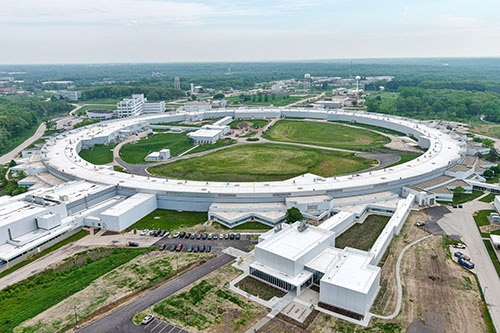
Argonne’s Advanced Photon Source (APS) facility.
In addition, LSU is one of only two universities in the country with a synchrotron. As you might know, Argonne operates the Advanced Photon Source (APS)—one of the five Department of Energy synchrotron facilities. We have 72 beam lines and thousands of users who come on site from around the globe. It’s an Office of Science user facility where people can get access for free through a competitive proposal process, if they’re willing to publish their results. Well, we just went through a $850 million upgrade and are now the brightest hard X-ray source in the world. We are about 500 times brighter than before, and about 500 billion times brighter than what you experience at your doctor’s office.
It doesn’t sound like Argonne really needs LSU’s synchrotron capabilities.
For those who need a primer on critical minerals and materials, can you explain the difference between them? Sometimes these terms are used interchangeably, while the U.S. Department of Energy and the U.S. Geologic Survey, for example, have different ideas about which ones they are?
As far as the difference between minerals and materials—a critical mineral is a naturally occurring raw resource or element, like an ore dug out of the ground. A critical material is what I get when I process that critical mineral; it’s a product. It’s the difference between copper ore and copper metal, for example.
The Department of Energy maintains a list of minerals and materials that are critical for energy technologies and might have a supply chain risk due to our exposure to limited resources or concentrated supply chains. We have defined 17 materials as critical, which means they’re foundational to U.S. energy technologies and competitiveness while their supply chains are highly concentrated overseas, often just depending on one single country of origin. That’s a big geopolitical risk and a big economic risk. Examples are rare earth elements, copper, lithium, or nickel. The Geologic Survey is more comprehensive and focuses on the whole economy and national security. Their list is broader to cover about 50 minerals, including things like potash and helium.
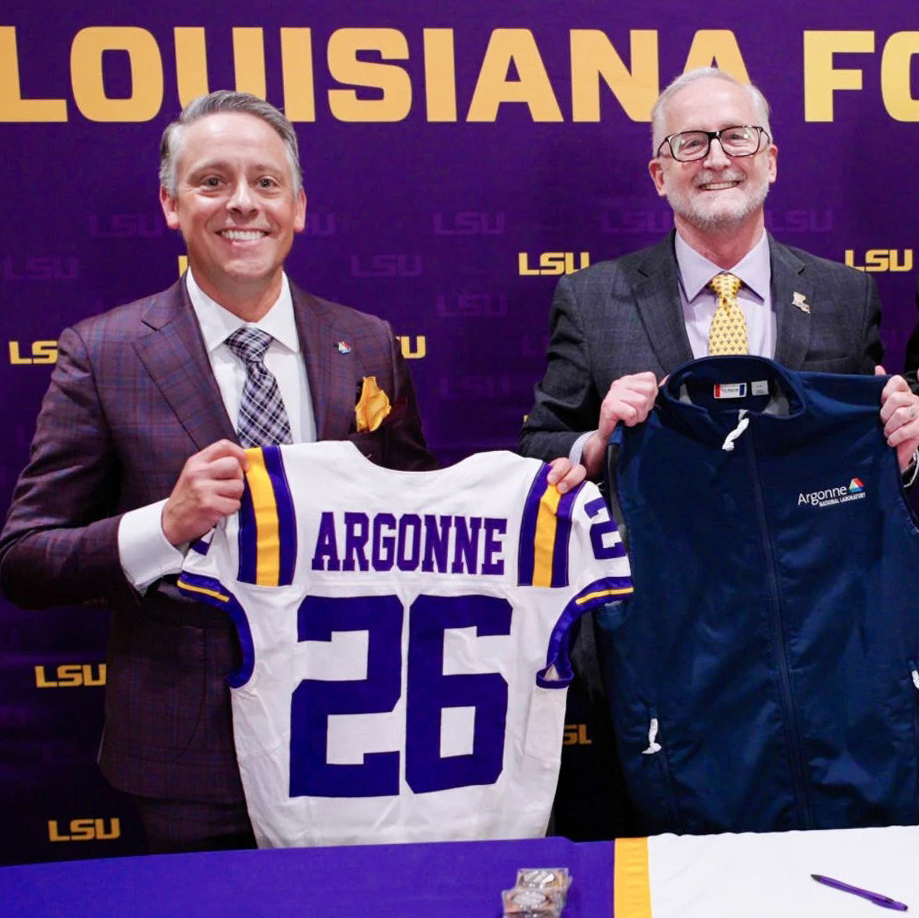
Claus Daniel, left, with LSU Executive Vice President & Chancellor James Dalton at the Argonne National Laboratory-LSU research partnership agreement signing in Washington, DC, in January 2026.
Our perspective at Argonne is: What are the new energy technologies we are pursuing that will be truly important for our economy in the future, and what materials will they rely on?
To give you an example: In batteries, we have materials where we rely on foreign supply chains quite dramatically for things as mundane as copper, or nickel, manganese, and cobalt. While we have a lot of copper ore in this country and do mine it, we are not doing much processing in the United States for copper. So, we mine the copper ore, it leaves the country, goes somewhere else, gets processed, and then comes back as copper we can use. That’s a big supply chain risk, just because we don’t have that processing capacity in the United States. Meanwhile, LSU is the flagship university of Louisiana, which has a large industrial base in chemical manufacturing and processing that could be leveraged for critical minerals and materials as well.
We believe LSU and Argonne National Laboratory can do a lot together. Especially since LSU has deep expertise in minerals processing and chemical engineering.
So, we are not really talking about critical minerals sourced in Louisiana but about advancing the technologies that can turn critical minerals into materials more efficiently?
Yes, and LSU’s connections with the leading manufacturing and processing companies in Louisiana provide the right kind of real-world deployment environment. It’s not just a lab setting. LSU offers a combination of students, experts, capabilities, and opportunities for application that really makes for fertile ground.
But there are also some natural resources that have been untapped in Louisiana, such as lithium in the Smackover Formation, which stretches from Texas through Louisiana all the way to Florida.
What is your read on what Louisiana’s processing and chemical manufacturing industry needs LSU and Argonne’s help to solve?
Every chemical process needs to be proven and demonstrated on a certain scale before you can take the financial risk of scaling it up to the next level. You need a pilot-scale demonstration to solve some research questions before you can go to commercial production scale. That’s where Argonne and LSU can work together.
Here at Argonne, we have a facility called the Materials Engineering Research Facility, or MERF. It specializes in chemical scale-up. We take things from where a chemical company has found a special new molecule and has a recipe to make that chemical on a small scale, like in a beaker or in a small reactor, maybe a couple of grams at a time. They don’t yet have the expertise to make more. MERF’s job is to help them solve the technical challenges in doing this. Are they using the right catalysts, buffer solutions? Sometimes you go a traditional chemical processing route and make a lot of material of varying degrees of quality, then separate out the really good material from the bad material. When you do that, all the bad material becomes waste, which means your cost goes up. The more pure your material needs to be, the more expensive your process gets. Meanwhile, we are looking at entirely new process technologies that allow us to make large quantities of only the good material and minimize the waste, and in doing so, reduce cost dramatically.
What do you see as one of the most interesting things happening in Louisiana right now?
Aclara, a company focused on magnetic rare earths, is putting a new $277 million rare earth separation facility in Louisiana. That’s interesting, and we are working closely with them to ensure this can happen without hiccups, on time, and with the right technical solutions.
What is Argonne doing with Aclara and others?
For Aclara, we are developing an artificial-intelligence-enabled digital twin and putting process models together for Aclara’s rare earth separation pilot plant that was recently inaugurated (March 18, 2026). We help them nail down exactly what things need to look like when they put the commercial-scale plant on the ground and reduce that scale-up risk for them. This way, there’s a much greater likelihood that what they install the first time will work and run efficiently.
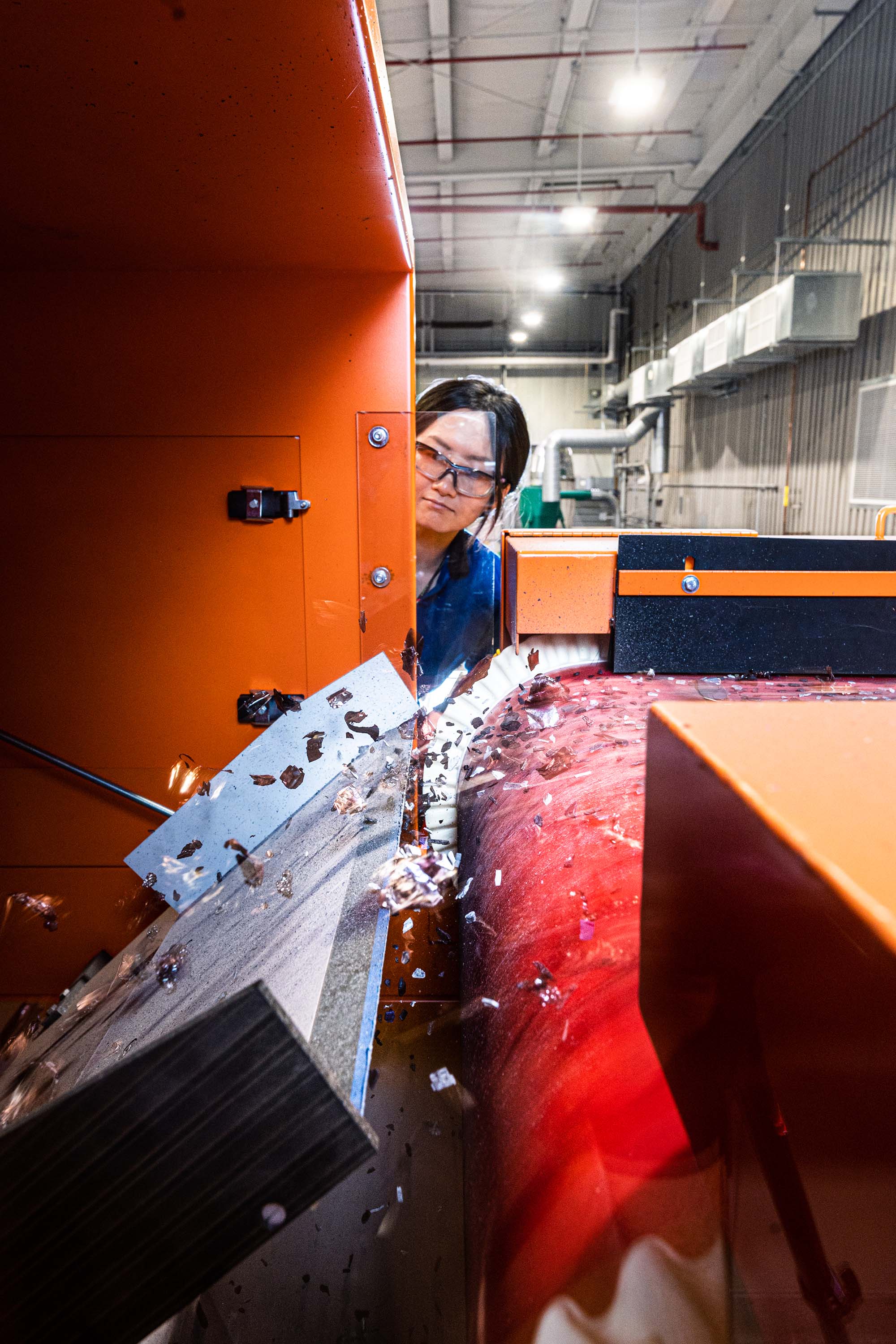
Argonne’s ReCell battery recycling initative captures critical materials that otherwise would go into landfills.
We are also leading a collaboration called ReCell. It’s short for recycling batteries, and we are advancing materials discovery and materials recovery and recycling from spent batteries. Not AA and AAA batteries—these are automotive and grid-scale, large-scale batteries. As we touched on before, batteries contain a lot of critical materials. They mainly come from foreign sources, and once we have a battery built, we don’t want to have it end up in a landfill or leave the country. We want to reduce our dependence on foreign-sourced materials like lithium and cobalt by figuring out how to better recycle these battery materials and make them part of a domestic supply chain.
While Argonne’s formal partnership with LSU covers a lot of ground, what areas are you the most excited about working with LSU on?
The Department of Energy has set the goal for commercial production of chemicals and advanced materials to be 10 times more effective by 2040. As far as our partnership with LSU, I see the greatest excitement about three topics.
One is enabling our chemical industry in the United States to become more competitive. I believe we can have a significant impact on the chemical manufacturing side. The Gulf Coast contributes about 40% of the entire United States chemical manufacturing GDP, which is about $650 billion (20% of the global market). If we do all the right things, we could double that in 10 years. Think about what $1.3 trillion in revenue can do in term of new capacity, innovation, and job creation—that’s very exciting.
The second one is new energy technologies, and if we can reduce our dependence on foreign-sourced critical materials, even by as little as 25%, it would have a huge economic impact on our country.
Then there’s the development of a skilled workforce. That’s a natural fit with LSU as an academic institution. We want to work with LSU to build the next-generation workforce, including through researcher exchanges and joint research. We need the right people who can do this work in the United States, and if we want to build and make great things, we need engineers.
I want to end this conversation by wishing Argonne a happy 80th birthday.
Thank you!
We were created in 1946 right after the Manhattan Project ended, and with that we became the first national laboratory. Make sure to check out our video of 80 years of Argonne history in 80 seconds.